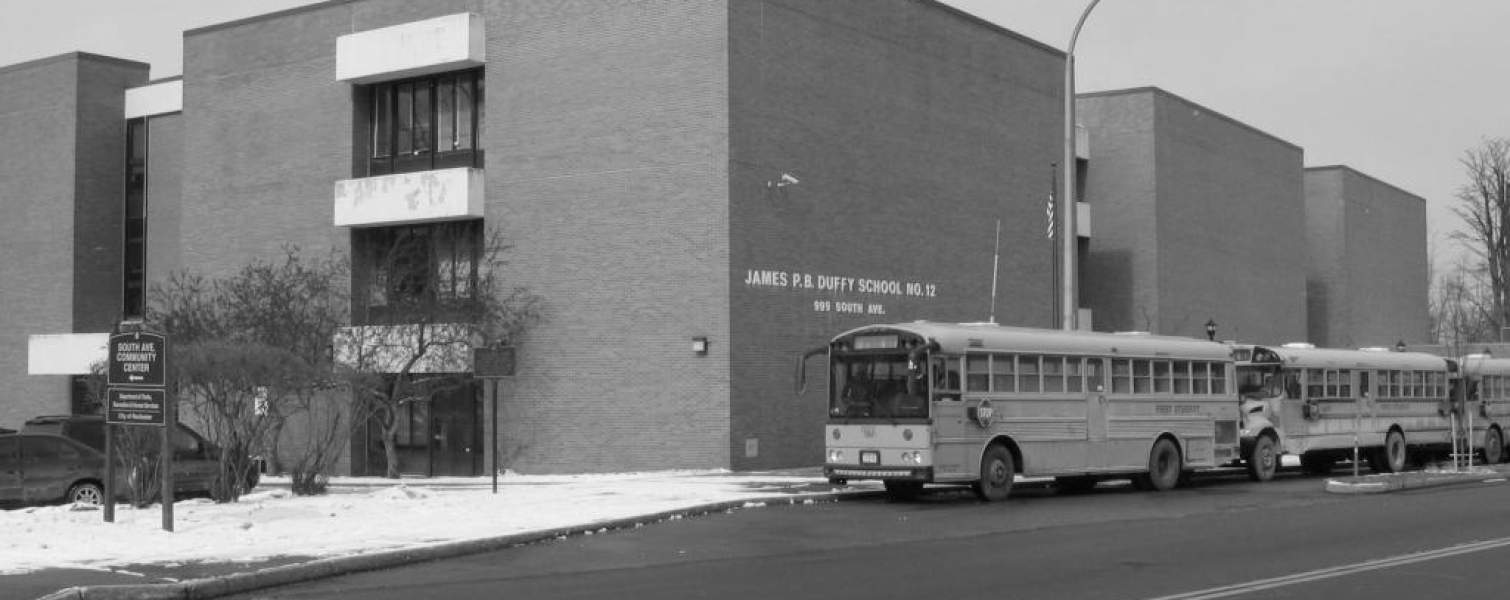
Frederick Douglass Rural Homesite
999 South Avenue, Rochester, New York | Officially Marked Monument
In 1852, Frederick Douglass moved from his urban homesite on Alexander Street to a hillside farm south of the city. In this relative seclusion, he could more easily accommodate parties of fugitive slaves moving toward Canada on the Underground Railroad.
By 1870, Douglass was spending much of his time in Washington, D.C., where he sought appointment to some national office whose prestige he could employ to further the cause of African Americans. On June 2, 1872, while Douglass was in the nation’s capital, a fire of suspicious origin consumed his farm home and barn. Though no one was hurt, the Douglass family lost most of its possessions. Embittered, Douglass abandoned Rochester for Washington, never to return until his memorial service in Rochester’s Central Church and his interment at a gravesite in Mount Hope Cemetery in 1895.
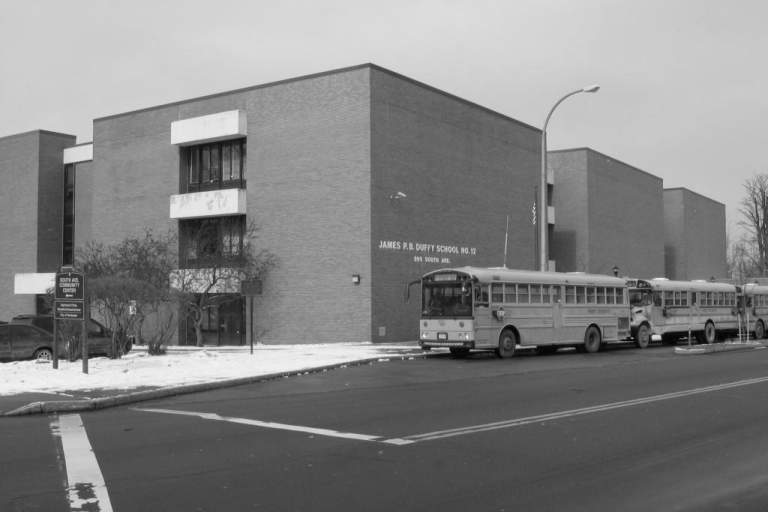
The site now stands on South Avenue near Highland Park and is occupied by Rochester’s School No. 12. A recent school annex is named for the Anna Murray - Frederick Douglass Academy; Anna Murray-Douglass was Douglass's first wife.
Two historical markers adorn the site. The latter marker, placed in 2005, contains a great deal of interpretive information about Douglass’s life and his twenty-five years in Rochester.
In 2018, one of thirteen replicas of the 1899 Douglass statue displayed at Rochester's Highland Park Bowl was installed here. The replicas, executed by Rochester sculptor Olivia Kim, commemorated the bicentennial of Douglass's birth in 1818.
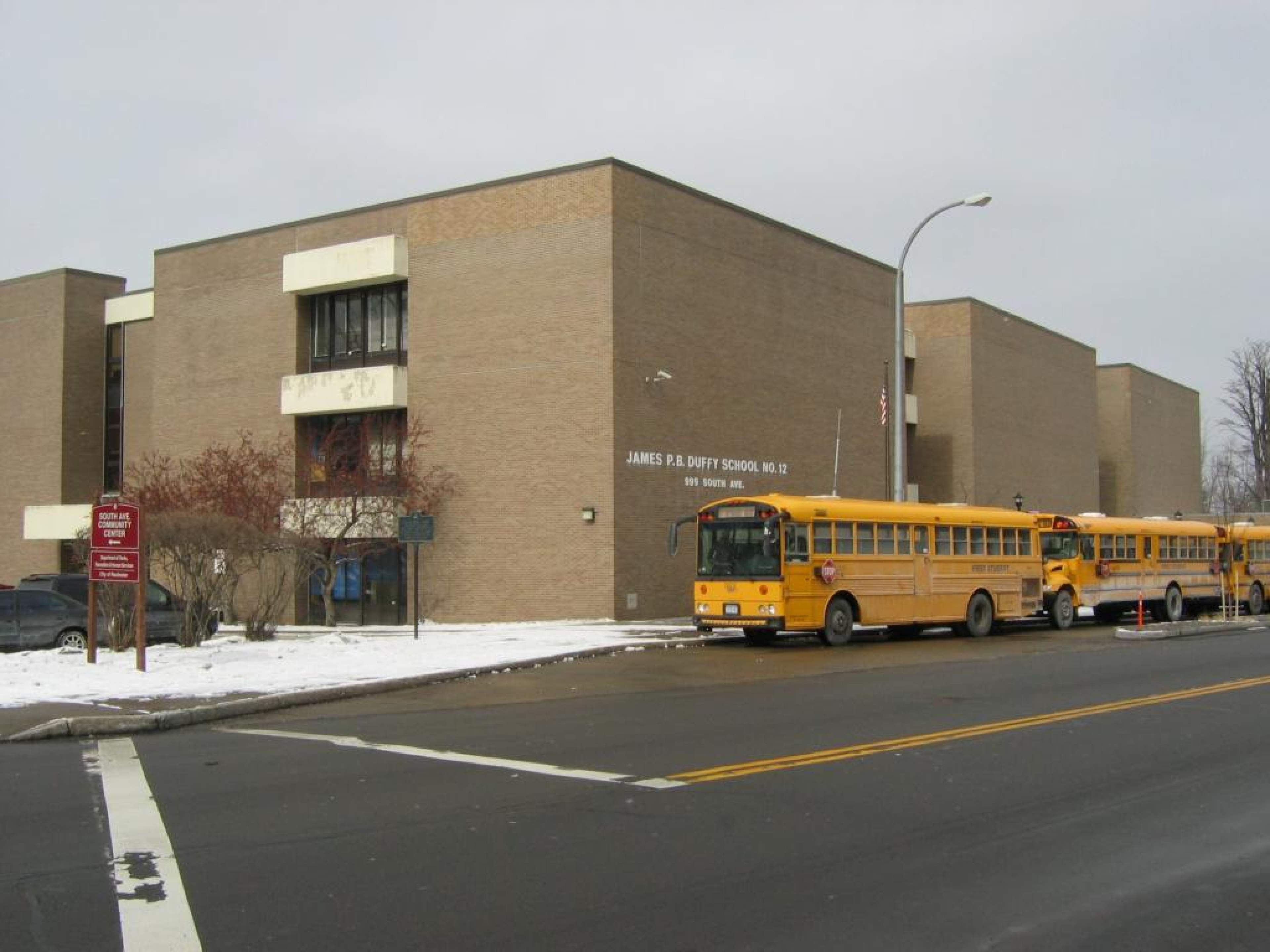
School No. 12
Well, it's less rural now: Rochester's School No. 12 now occupies the site of Frederick Douglass's once-secluded farmhouse.
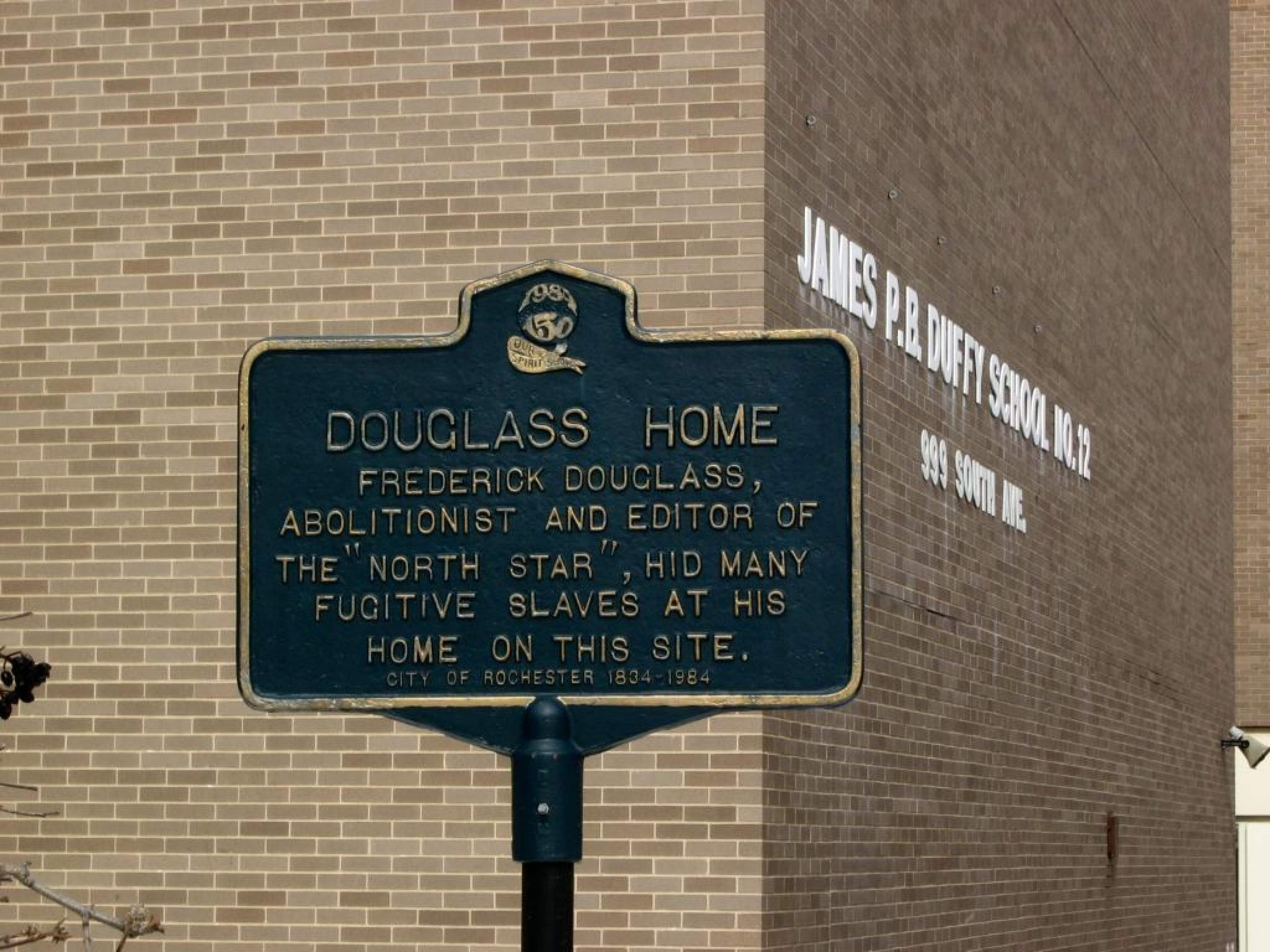
1984 Douglass Home Marker
A 1984 historical marker identifies the site of Douglass's rural home.
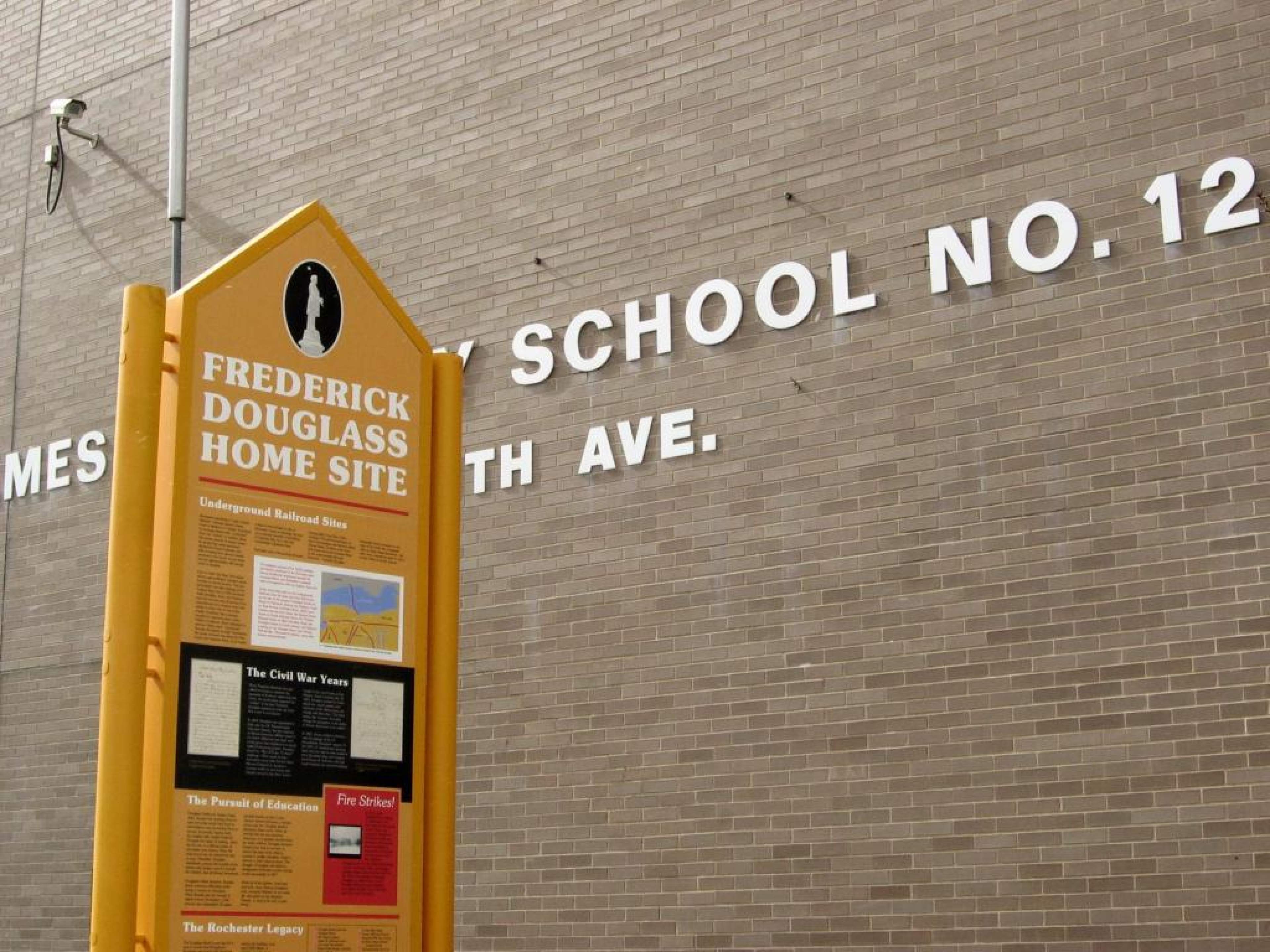
2005 Historical Marker
A 2005 historical marker contains rich interpretive information about Douglass's life, works, and activities while residing on this site.
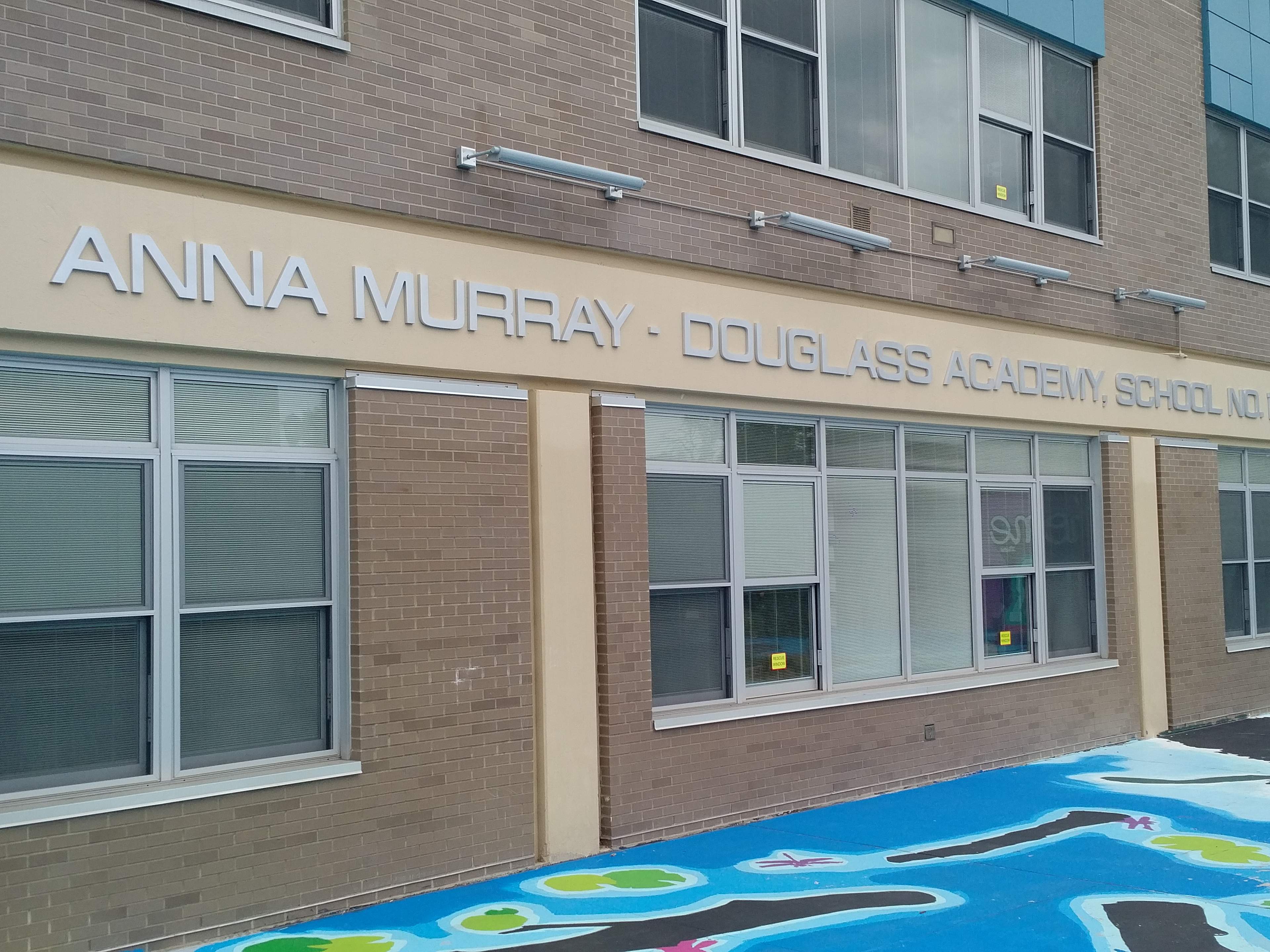
Murray-Douglas Commemorative Signage
An annex to School No. 12 is named the Anna Murray - Frederick Douglass academy. Murray was Douglass's first wife.
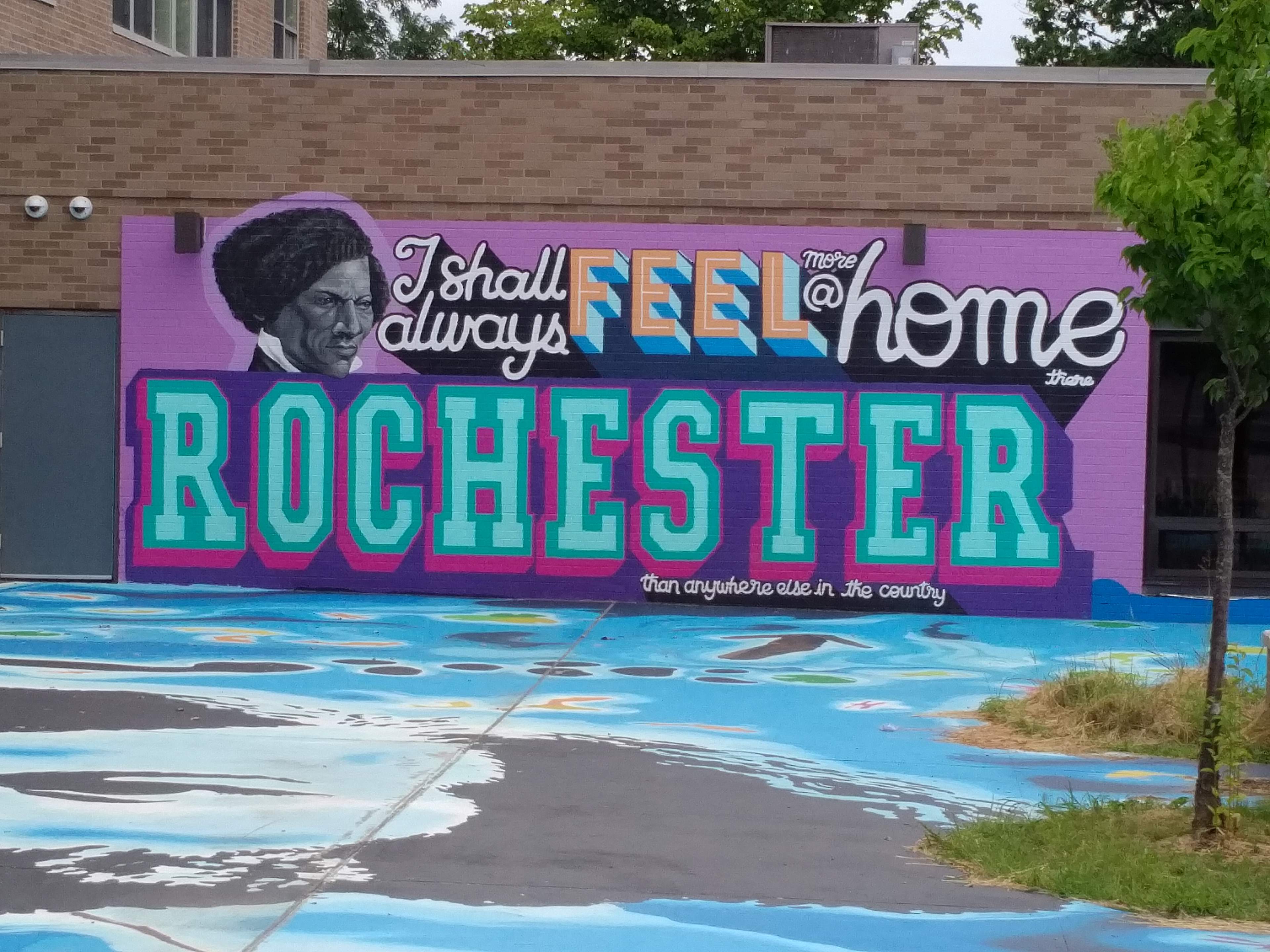
Douglass Quote Mural
A wall mural on the school annex reproduces a Frederick Douglass quote: "I shall always feel more at home {Rochester] than anywhere else in he country."
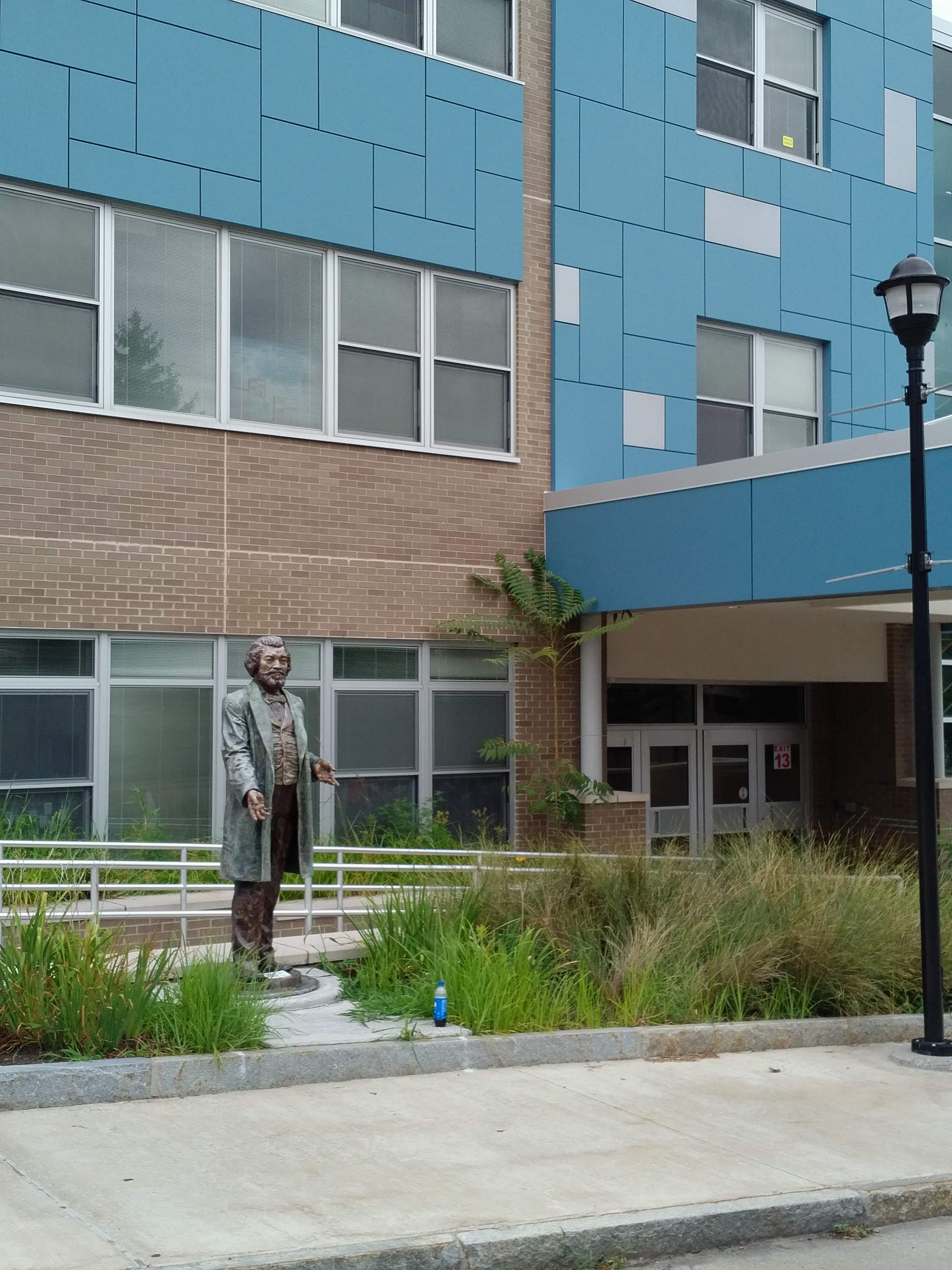
Frederick Douglass Replica Statue
Olivia Kim Frederick Douglass replica statue stands before the school annex.
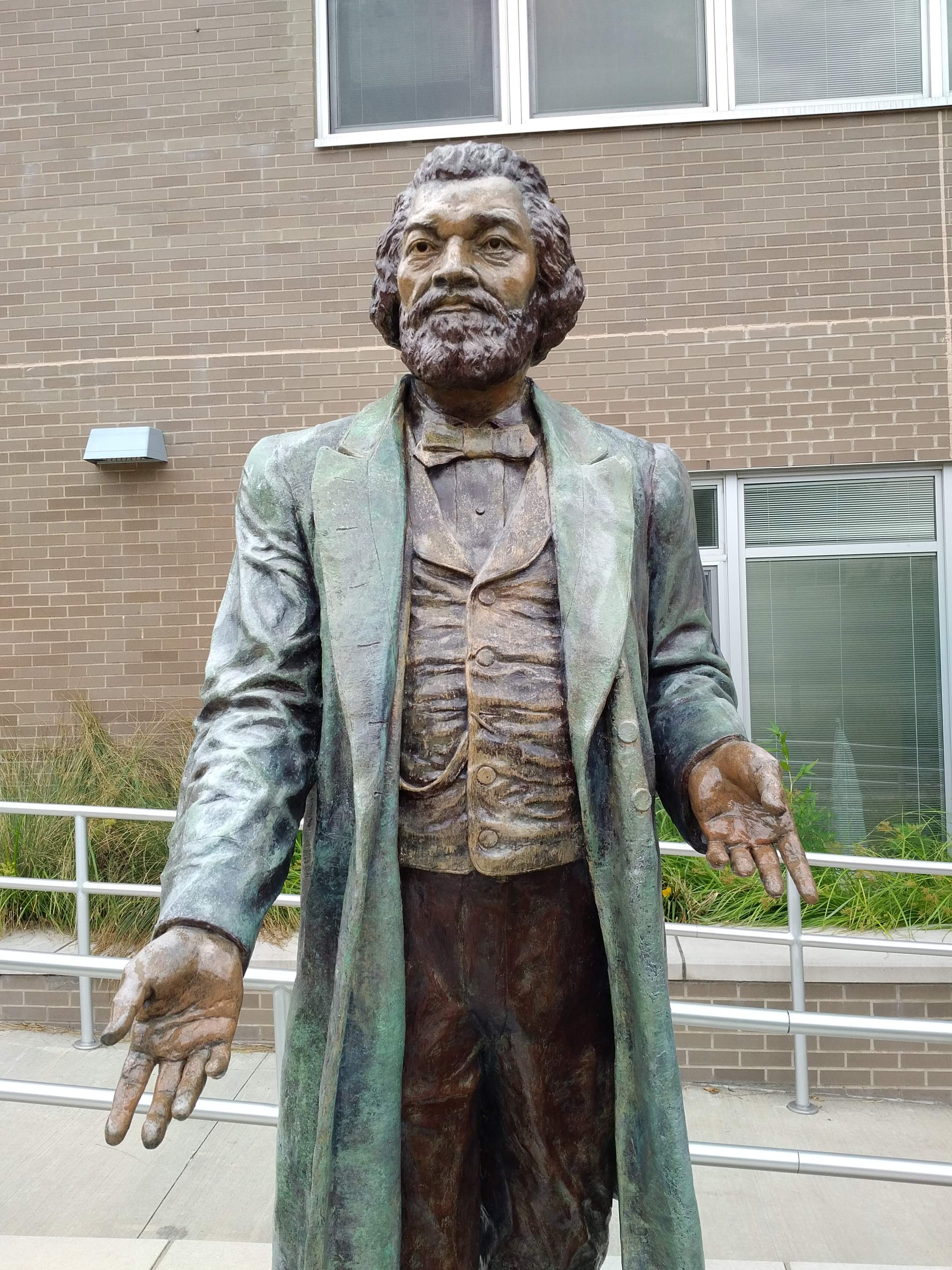
Replica statue, detail
Medium-close view of the Olivia Kim Douglass replica statue.
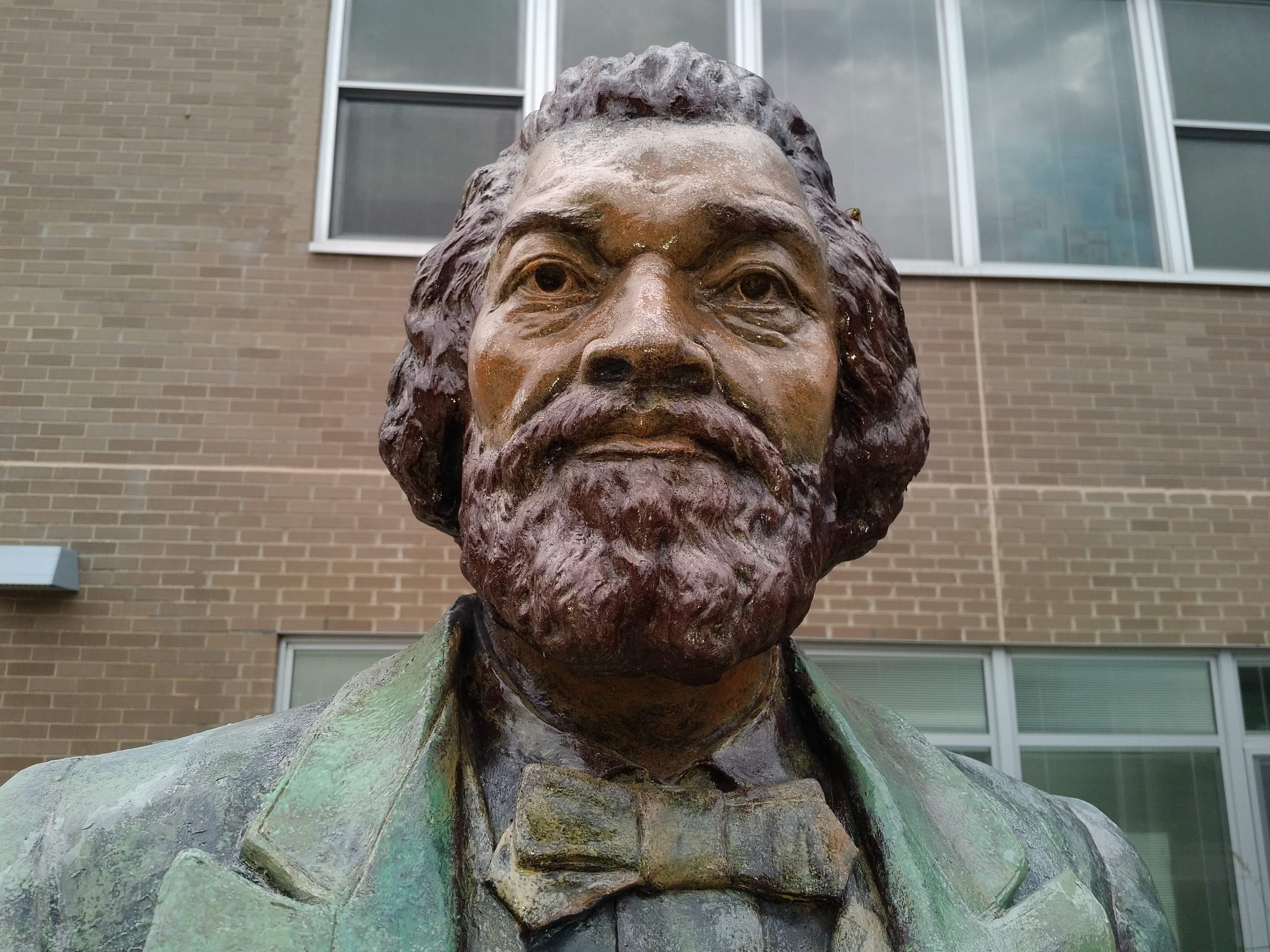
Replica Statue, close detail view
Facial Closeup of the Olivia Kim statue.
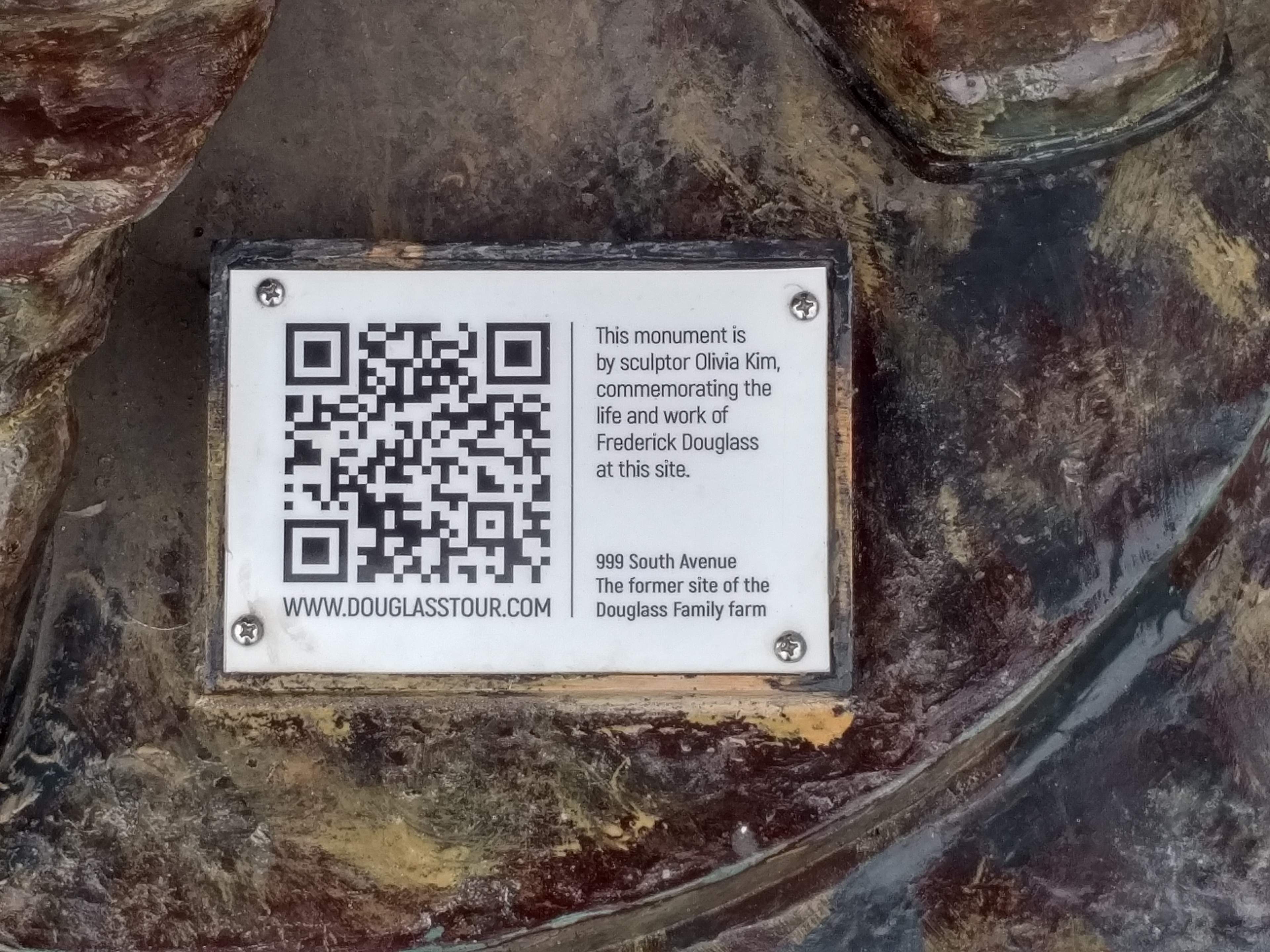
Douglass Statue sign
Each Olivia Kim replica statue bears a unique identifying sign. The QR code leads to douglasstour.com, an educational website.