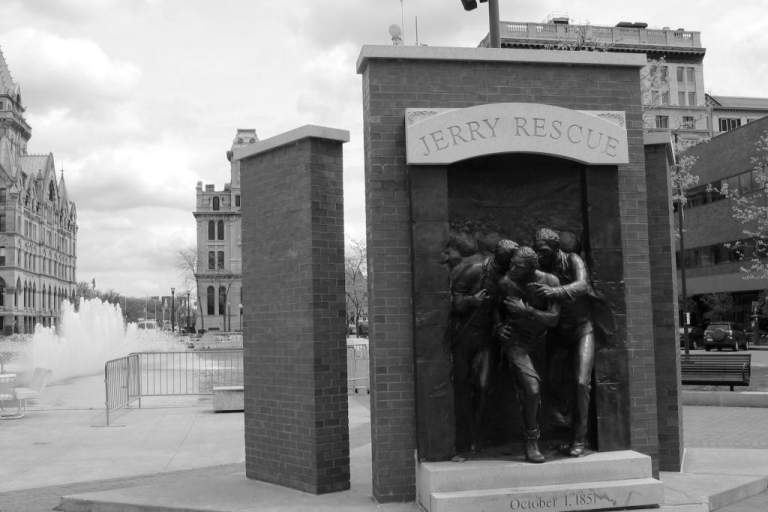
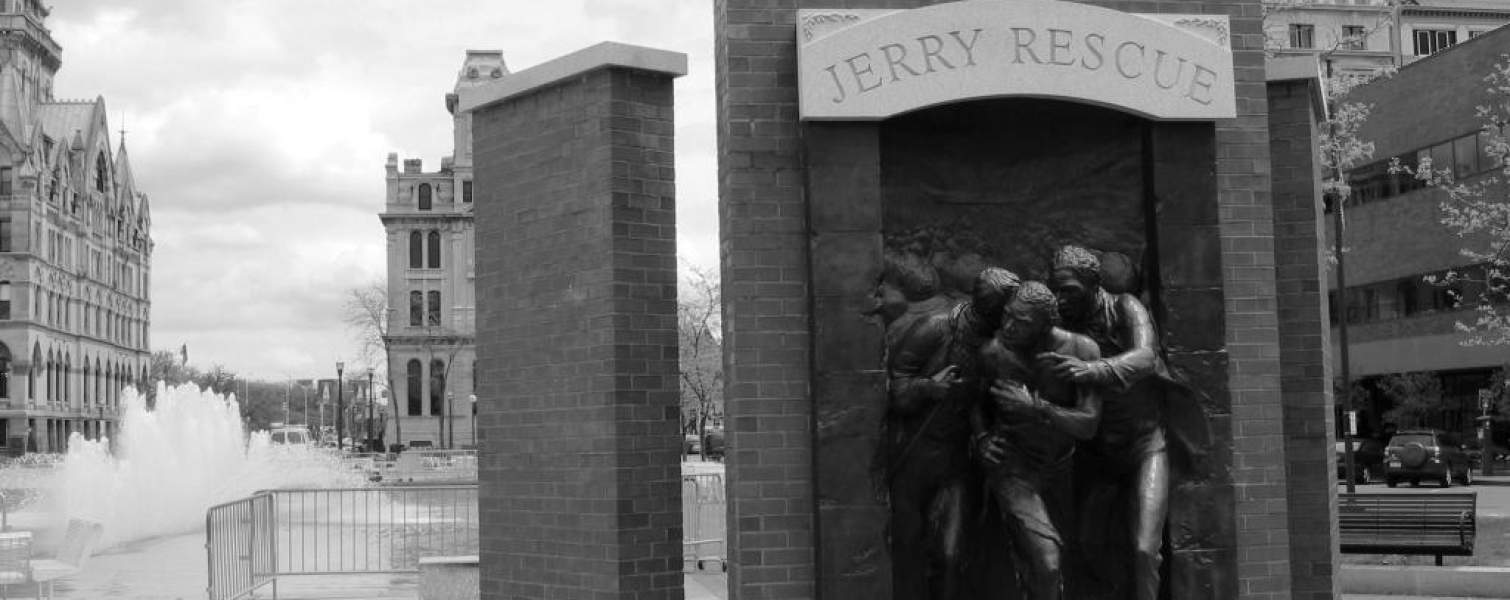
Jerry Rescue Monument
Clinton Square, Syracuse, New York | Officially Marked Monument
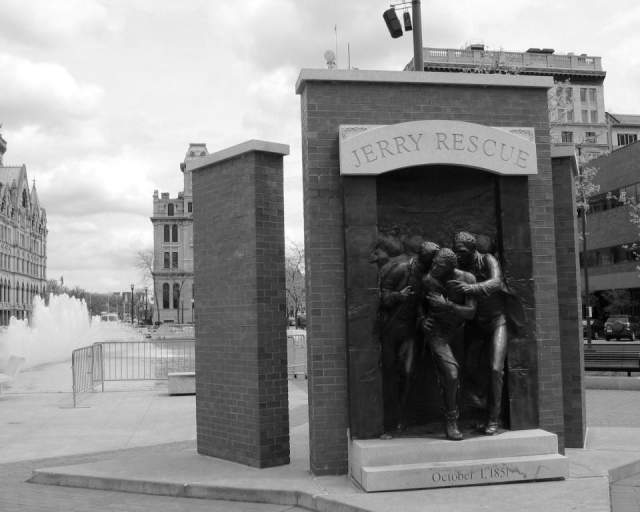
This monument, added to Clinton Square in 2001, celebrates the October 1, 1851, rescue of William "Jerry" Henry, an escaped slave from Missouri.
Henry had been arrested in Syracuse and identified as an escaped slave; Federal officials eager to compel obedience to the then-new Fugitive Slave Act determined to return him to Missouri. The arrest occurred on the very day that a major abolitionist meeting was taking place in the city. Following one failed rescue attempt, a large "mob" stormed a police station, battered down its doors, and rescued "Jerry" Henry, defying the Fugitive Slave Act. Within a few days, "Jerry" escaped to freedom in Kingston, Ontario.
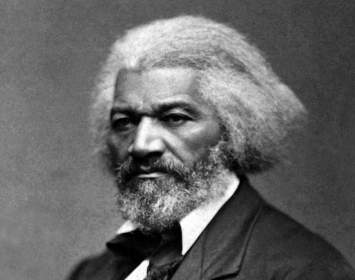
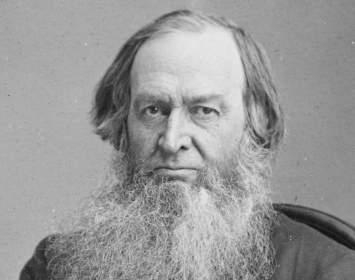
Shortly after the rescue, the Townsend Block, a large commercial building erected in 1829 on the south side of Clinton Square, was renamed the Jerry Rescue Building in commemoration of the event. This was the site of annual celebrations of the rescue; Gerrit Smith addressed each such celebration between 1852 and 1858. Also speaking at the 1858 celebration was the famous Rochester abolitionist Frederick Douglass. In 1859, Gerrit Smith declined to address the celebration, citing his growing disillusionment with what he viewed as the abolition movement’s lack of effectiveness.
Even so, a national example had been set for resistance to the Fugitive Slave Act across the North—and it all began near this spot in downtown Syracuse.
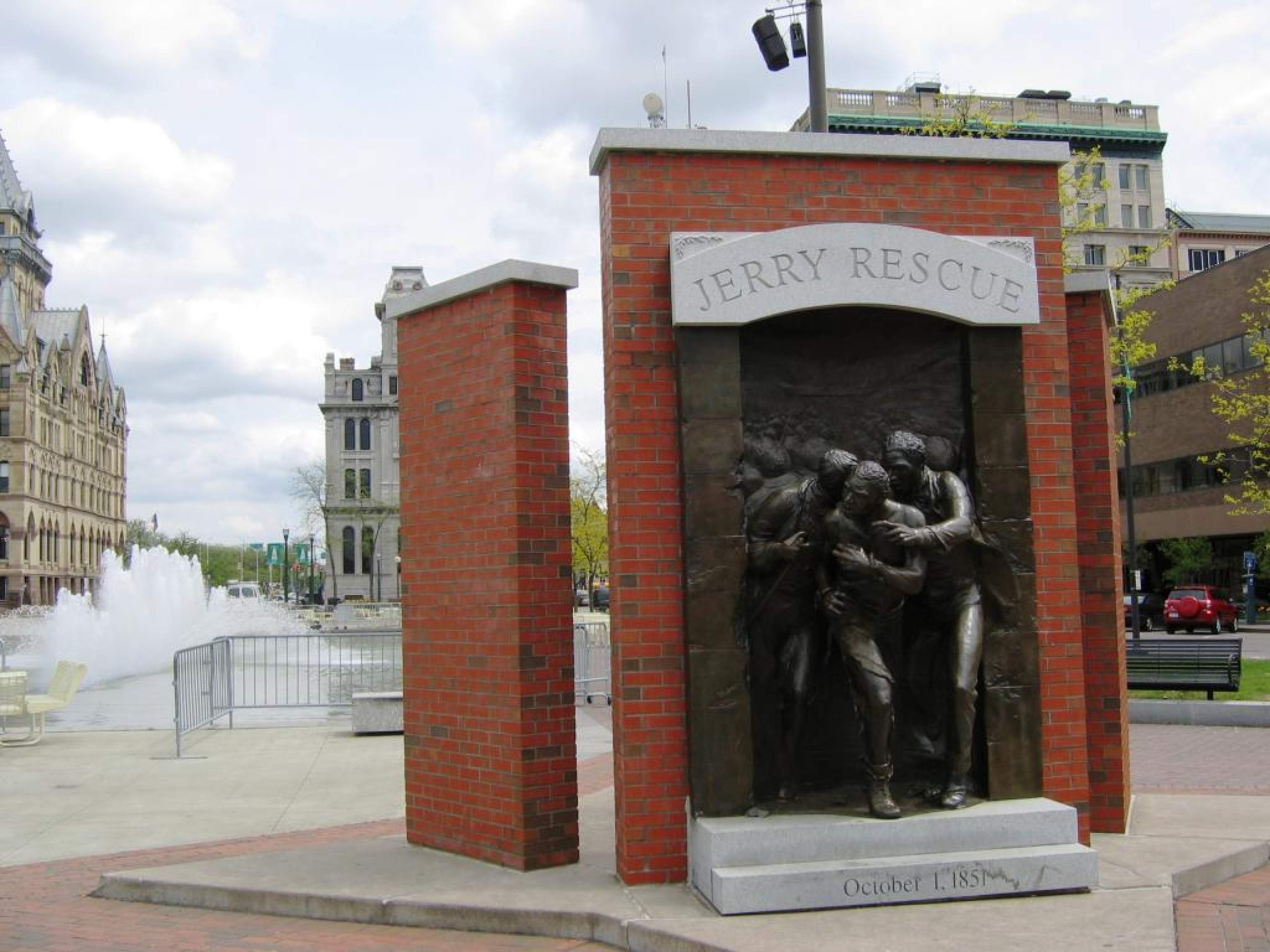
Jerry Rescue monument overall
Overall shot of the Jerry Rescue monument in downtown Syracuse.
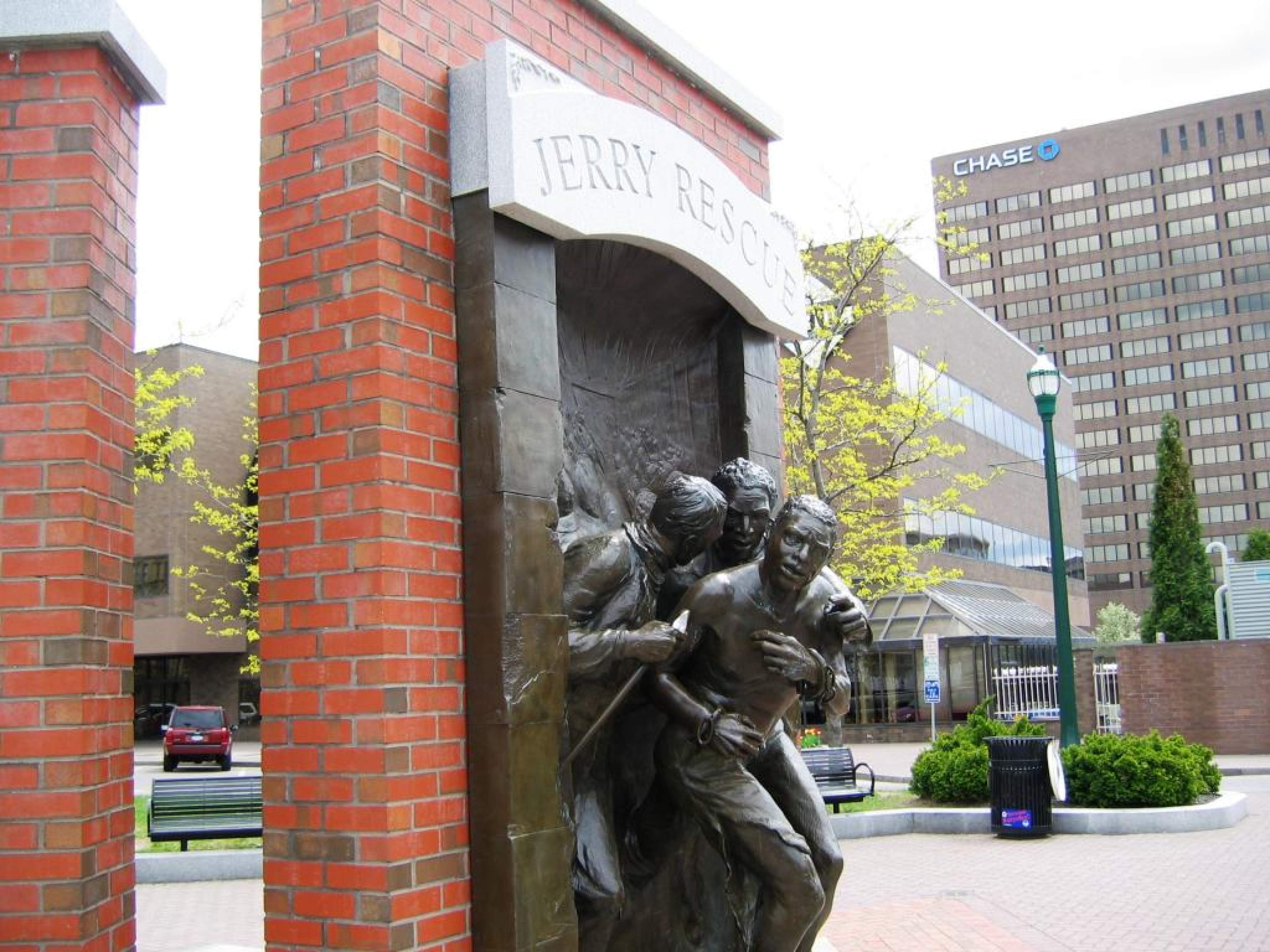
Jerry Recsue monument closeup
Detail of the impressionistic sculpture forming the heart of the Jerry Rescue monument. The frightened "Jerry" is aided by larger-than-life figures representing prominent Syracuse abolitionists.
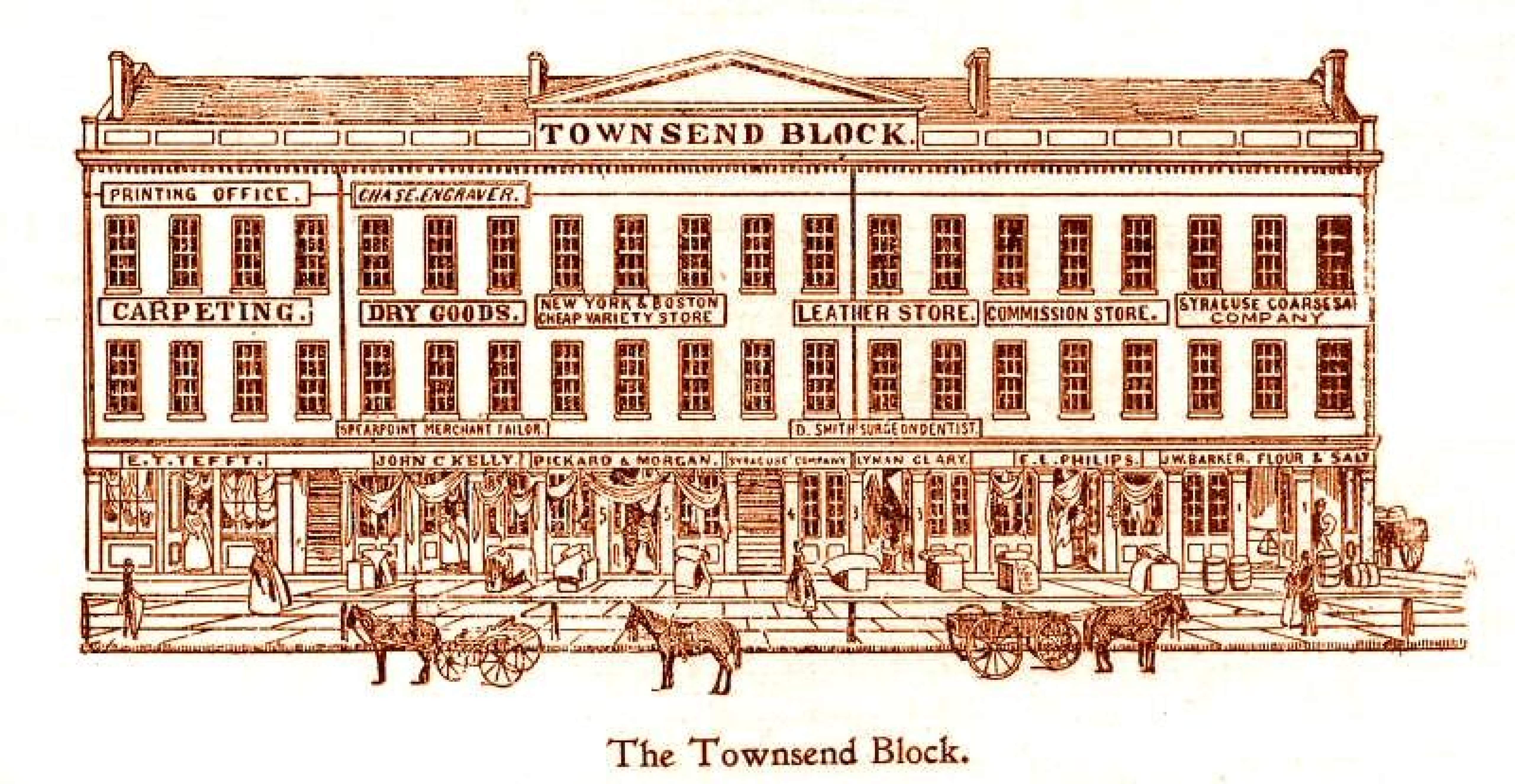
Jerry Rescue building
The 1829 Townsend Block, demolished in 1974, occupied the south side of Clinton Square. During the 1850s, it was renamed the Jerry Rescue Building. The present memorial occupies a site near that of this structure.
Associated Causes
Associated Historical Events
The Jerry Rescue
October 1, 1851